



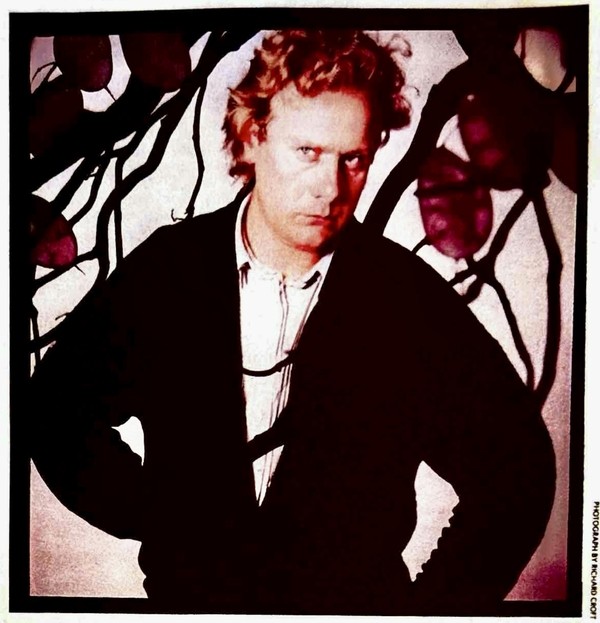
 Olaf Bär--Bär, pronounced bear, means bear--has come to the court of the art song like a folk tale's hero from afar. (Even the whiff of the Nordic forests in his name seems right.) Unknown, untried, scarcely regarded even by those who sent him from East Germany, he presented himself in London six years ago at the first Walther Gruner International Lieder Competition and smilingly prevailed. Part of the prize was a debut at Wigmore Hall, London's classiest recital venue. On Friday, November 18, 1983, Bär took the stage with a rich program of Mendelssohn, Wolf, and Richard Strauss grouped around the centerpiece of Schumann's popular cycle Dichterliebe ("A Poet's Love"). By evening's end, the lyric baritone had added to his conquests the city's most discriminating critics, as well as scores of cognoscenti for whom the German art song's rushes of romance, subtleties of mood, and stabs of irony border on an obsession.
 As the jilted lover of Schubert's cycle sets out, the wind whistling by the weather vane on his lost sweetheart's roof seems to taunt him. "I should have noticed the sign stuck on the house before," he chides himself in bitter fury. "I would have known better than to go looking for a constant woman within.... What care these people for my pains? Their child will be a rich man's bride." (No. 2, "The Weather Vane" - Illustrations by Jacqueline Chwast |
Time will tell whether Bär (or anyone else, for that matter) will come to dominate the coming age as Fischer-Dieskau did the age that is passing. Still, his admirers' claims grow more and more persuasive with each new season. Two years ago, when Bär returned to Wigmore Hall, it was with a three-concert series of the three song cycles of Schubert, performed in the space of five days. Tickets went on sale seven months before; they were gone in two hours.
Among Schubert's six hundred-plus songs, which include a vast share of the masterpieces of the genre, the three cycles hold a privileged position. In separate ways, each is a touchstone of the recitalist's art. Die Schöne Müllerin ("The Miller's Fair Daughter"), the first of the three, relates in affecting melodies the sentimental tragedy of a young miller lad who drowns himself for thwarted love of his master's daughter. Singers say that its incessant movement between high and low registers makes it technically the most difficult. Schwanengesang ("Swan Song"), the final cycle, contains fourteen songs from the tail end of the composer's career, among them silken love lyrics of supreme refinement and soliloquies in a tense, rhetorical style startlingly prophetic of Gustav Mahler. The collective title is not Schubert's but that of his posthumous publisher; the songs add up to a ready-made recital program but are not really a cycle at all. Schwanengesang's challenges are the challenges of the individual numbers.
And then there is Winterreise ("Winter Journey"), the greatest song cycle ever to have issued from the soul of man.
 Alone, the wanderer pictures his tears mingling with the snow and returning where he is no longer welcome. "Snow, you know what I long for," he sings in slow, broadly arched phrases. "Say, where do you mean to go? Follow but my tears, and soon you will reach the brook. With it, you will pass the city, twisting through the happy streets. When you feel my tears glow, there is my sweetheart's house." (No. 6, "Flood") |
But for Bär and his audience alike, the prospect of his first local attempt at Winterreis was fraught with suspense. The morning of the concert, the BBC came around to hang microphones. "They said they'd missed Fischer-Dieskau's first London Winterreise," explained Diana Mulgan, Bär's manager for Western Europe, "and they weren't going to let that sort of thing happen again." Bär had sung the cycle only once before, some three weeks earlier, in Brussels. And with a degree of self-possession bordering, a sensible person might have thought, on the brazen, he was going into the studio the following week to record it.
For all its beauty, Winterreise is a forbidding work. When Schubert first played the cycle to his intimates, in 1827, they confessed to complete consternation. Only one song, "Der Lindenbaum" ("The Lime Tree"), found favor on that occasion; it remains to this day the most accessible--so much so that German children learn it in school and grow up thinking it is a folk song about the consolations of nature. Bär is sure the usual, nostalgic treatment is wrong: "When the wanderer imagines the tree calling to him, what the tree is sayin is 'String yourself up!'"
If Schubert's friends had caught that, they would no doubt have rejected this song along with the rest, and Schubert would have remained undaunted. "I like these songs more than any others," he told them after hearing their poor reception, "and you will get to like them, too."
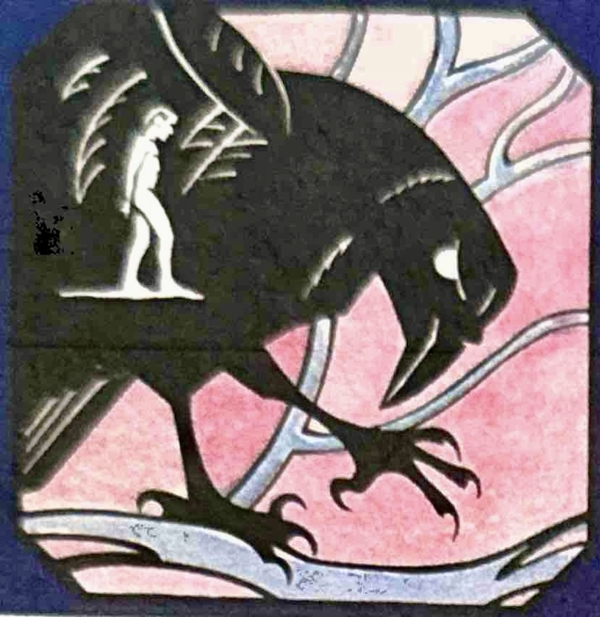 Since leaving the city, the broken-hearted traveler has been followed by a crow circling overhead, evoked high on the keyboard in one of the most limpid melodies Schubert ever wrote. "Crow, strange bird," he sings, "will you never leave me? Do you expect soon to seize my corpse? Well, it will not be long now to the end of my wandering. Crow, let me at least see constancy to the grave." (No. 13, "The Crow") |
A stranger I came hither;
A stranger I depart.
What has happened? In spring a young wanderer came to a new town and fell happily in love. The next winter, his beloved's parents, previously favorably inclined, decided to marry her to a rich man instead. We join the outsider as he departs on a cheerless path that will lead him over frozen streams and meadows, through deserted ravines, past graveyards and bare forests. Everything he sees or hears--a whistling weather vane, a signpost, a post horn, a trembling leaf--triggers associations of despondent rage, denial, dismay, and resignation. The anguish of memory drives him into deeper and deeper torment, at last into numbed dementia.
A common prejudice has it that lieder singing is a cerebral, elitist art, the refuge of performers patronized as "mature": mature in years; mature in insight; mature also, and fast passing into decline, as to vocal endowment, which, according to the same prejudice, was probably no great shakes in the first place. Bär's quick rise undermines that prejudice; Fischer-Dieskau, at sixty-four--the inevitable point of reference--both reinforces and contradicts it.
 At night, conjured up in nervous rumbling, the wanderer reaches a village, where only the watchdogs are stirring. He thinks of the villagers cradled in dreams of joys and pleasure that will all vanish with the day, and presses on."Chase me off with you barking, you watchful dogs. Leave me no peace in the hours of slumber. I have done with all dreaming. Why linger here among the sleepers?" (No. 17, "In the Village") |
An illusion either way, yet it leaves one suspended in a paradox. For all the seeming immediacy, Fischer- Dieskau seems also to be operating on the material from a great distance. He is magisterial. And so, because this is the paragon of the lieder singer, we forget that he did not spring into being as we know him now. In fact, Fischer-Dieskau, like Bär, came to the court of the art song like the hero of a folk tale--a soldier coming home from a lost war with nothing but his soul, wit, and art to help him make his fortune. Another story, to be sure. Still, once upon a time, Fischer- Dieskau, too, must have owed part of his appeal not to an old master's sorcery but to advantages of apt youth, as Bär does now.
Bär's sound is a young man's sound: soft-grained, mellow in timbre, with a light, warm core, a buzzy resonance at the bottom, and easy access to a sunny, tenor-like top. The temperament that he reveals in performance is one that becomes a young man: good-natured, lyrical, frank, impulsive in joy and sorrow, yet capable of introspection. His diction is casually impeccable, and he has an unforced, instinctual way with a story. All in all, splendid equipment for Schubert.
 The wanderer's morbid fantasy turns the wreaths in a graveyard into the signs of an inn inviting tired passers-by to cool repose. He decides to stop here, in vain. "Are all the chambers taken?" he asks as the harmonies of the accompaniment suggest a church chorale. "I am sinking with weariness; I have a mortal wound. Pitiless inn, yet you send me away? Onward, then, onward, my trusty staff." (No. 21, "The Inn") |
"So much is written about Winterreise--too much," says Bär, who, having read none of it, seems unfazed at the thought of all there might be to learn. "I want to go at it straight, in an unspoiled way. Why not just take a look and see what it is? We need scholars, certainly, but music is not scholarship. It's art, it's life. The artist is a messenger; it's his job to deliver the message. Naïveté is very important."
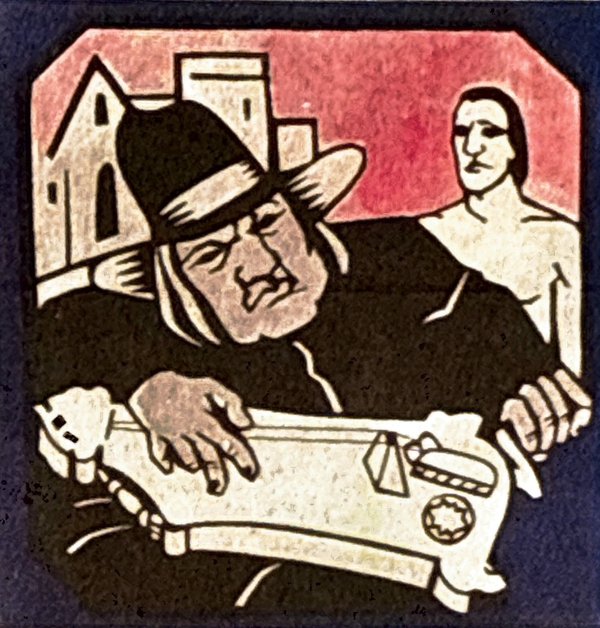 The bleak last song of Winterreise, composed in Schubert's sparest style, conjures up an aged organ grinder who totters barefoot and ignored by all on the ice beyond the edge of a village, cranking out hs songs with frozen fingers. To this eerie madman, the traveler addresses the cycle's haunting final words: "Strange old man, shall I go with you? Will you grind your hurdy-gurdy for my songs?" (No. 24, "The Hurdy-Gurdy Man") |
In London, with rehearsals, the concert, and recording sessions, Bär was immersed in the work for a week and more. After the concert, the coolest of his critics called him "already a master of a whole generation." Another spoke of "another triumph"; a third, of the performance's "uninterrupted dramatic integrity," noting with approval that "there was never the least hint of an interpreter's grand plan to get this or that particular insight across."
What none of them could know, and what may be the most revealing clue to Bär's interpretive radiance, is how fluid his readings are, how they were varying day to day, hour to hour, moment to moment.
From sunset to dawn
Many a head has turned gray.
The phrase--first yearning upward, then ebbing down--seems to capture the whole span of a lifetime. As Bär was singing it, it might sound resigned today, bitter tomorrow, and defeated the next day. The tender middle section of "Irn Dorfe" ("In the Village"), where the traveler imagines the villagers longing for a happiness they glimpse only in their dreams, was undergoing similar transformations, from melancholy to compassion. One day, he specifically requested that the postlude to "Das Wirtshaus" ("The Inn") be pounded out, like a revivalist hymn. The next day, smiling, he recognized the mistake.
Over the course of the week, no more than a handful of inflections stayed fixed. The day before the Wigmore recital, rehearsing at the home of his accompanist Geoffrey Parsons, he made something much too hysterical of a line about the frost melting, leaving the wanderer's whitened hair its natural black, and so he did again at the concert and in the recording studio. A line about kissing the snow to find the beloved's footprints also kept sounding overdrawn. (Maybe Bär pushed it too much because he did not quite believe it; it is not one of the poetry's finer conceits.) On the other hand, Bär could always be counted on absolutely to get a frisson on the word wunderlich (strange). It occurs in two key passages, first addressed to a crow that has been circling the young traveler's head ever since he left the city. (The melody, first heard high in the piano's treble register, is one of Schubert's most limpid.)
Crow, strange beast!
Will you never leave me?
Do you expect
Soon to seize my corpse?
It returns in the final song, addressed this time to a mad organ grinder who totters on the ice on the outskirts of a village, penniless, barefoot, and ignored. In him the wanderer sees his own bleak destiny.
Strange old man, shall I go with you?
Will you grind your hurdy-gurdv to my songs?
Over the piano's empty chords and tattered wisps of melody, Bär made the chill palpable, even at the first run-through, though outside the Parsons parlor sunshine was pouring down, crocuses carpeted the parks, and the February mercury was hovering comfortably in the sixties. In the Parsons parlor, the yellow walls glowed in the bright daylight, a friendly dog named Victoria, pedigree nondescript, was curled up under the piano, and the aromas of a slowly simmering lunch wafted in from the kitchen. "Was it simple enough?" Parsons wondered, as if there were a question. "After this song, there's nothing more to say," Bär answered. "Let's just not let it get 'beautiful' ... " Late into the third day of recording, 6:42p.M., take 241, Bär caught the spooky note again and wondered in playback, as if there were a question, whether it was not too much.
Bär does not calculate. "Onstage," he says when asked about his infrequent and contained yet highly charged gestures, "I mostly just try to stand still." Out of the public view, he sings--and listens--with his whole body, rising to the balls of his feet on a high note, jabbing a finger as he spears a metaphor. Hardly has Parsons struck up the prelude to the first song, "Gute Nacht" ("Good Night"), than Bär's knees begin to pump the rhythm and his hands sculpt the shape of the melody. An undercurrent of rage ruffles the surface:
Why should I wait
Until they drive me out?
--and Bär quietly clenches a fist, but the principal note in his voice is depressively elegiac, mixed with a mournful dignity. At the song's crucial turning point, Schubert gives the screw another turn: against expectation, he shifts from (conventionally "sadder") minor to (conventionally "happier") major, flooding the moment with the wanderer's resurgent affection, only to lapse back into minor at the close, deepening the ache of the loss.
Poetically, such reversals are among Schubert's most eloquent devices. Another singer would underline them, to make sure you get the point, and miss them. Bär lets them happen. The close observer may note that they light up his features with a flush of appreciation. Whether a listener sees or not, he senses it in the voice.
"A recital is a conversation," says Bär, who does not, despite the success of his records, greatly enjoy the sequestration of the recording studio. "A live performance gives much more of an experience." Nor does he approve, deep down, of the way recordings get put together. In this case, which was typical, the songs of the cycle were taped out of sequence, each once or twice straight through, with retakes and corrections following (some as short as one bar of music), though not necessarily the same day. Final takes were selected by consensus between the artists and the producer during playbacks, leaving the master to be pieced together later, like a mosaic with invisible cracks. Of the twenty-four Winterreise songs, only one (oddly enough, the one called "Täuschung," or "Delusion") would be unspliced, from a single take.
Bär's ability to launch into the midst of a song at full emotional tilt is amazing to witness--and explains why the splices do not as a rule get in the way of a coherent "performance" on his records. "I have gotten used to it," he said at the time, "because one has to get used to it, although it really is something one should not have to get used to."
And in this instance, it did not work. During the sessions, various factors put Bär out of sorts. The producer was new to him and uncongenial. So was Henry Wood Hall, a converted church in south London, where fumes from fresh paint were distressing his throat. Technically, his singing was flawed, he found later, and interpretively the tape was boring: "I knew I could do better." The recording company agreed and gave him three extra recording days, this time with a producer he knew and liked, at the Abbey Road studio (of Beatles fame), where he felt at home. This time, he took the songs in sequence. The record came out with his blessing last fall.
In a folk tale, this would be called living happily ever after. Before the Gruner lieder competition, who could have foreseen the life Bär has today? Alone of all his classmates from his native Dresden's Kreuzschule, whose pupils are the choristers of the world-renowned Dresdner Kreuzchor, he has gone on to pursue a career in music. His studies were centered on opera, where, though the possibilities for a lighter-weight baritone are fairly narrowly circumscribed, he has developed a choice repertoire that he has no immediate desire to expand: Mozart's Count (Le Nozze di Figaro), Guglielmo (Così Fan Tutte) , Don Giovanni, and the birdman Papageno (The Magic Flute); Richard Strauss's Count (Capriccio) and Harlekin (Ariadne auf Naxos); Tchaikovsky's Eugene Onegin (which he has yet to do onstage); Gluck's Orfeo (transposed far below the range contemplated by Gluck, who authorized versions for alto and tenor); and Wolfram, in Tannhäuser, which is likely to remain his only foray into Wagner. "Wagner is out of the question," he says. "Verdi is out of the question. There was nothing for me but lieder."
He learned from listening to Fischer- Dieskau, Peter Schreier, and Hermann Prey--"though his singing today isn't as clean as it should be"--but he had no mentor and is, as a lieder interpreter, essentially self-taught. Dresden, where Bär's grandparents live and where his own parents lived and died (he has no other family), remains Bär's base of operations. He has a long-term commitment to the opera there and keeps house with one of the ballet troupe's ballerinas. His life could have been so settled, so cozy, but then he went and won a prize.
As a result, he has an international career. Occasionally, he accepts a major operatic engagement in the West--in 1991, Don Giovanni, at Glyndebourne; a concert tour with Le Nozze di Figaro under Sir Georg Solti; and Papageno, his signature part, at Covent Garden, in London. His recitals have taken him all over Europe, as well as to Australia and Japan. This month brings his first recitals in America. Now that he seems to have everything an artist could wish for, what ambitions keep him going?
"Just today," he answers, "I was asking myself, Olaf, why do you do this? What is the point? You run around the world andsing and sing. Why do you do it?
"What I want is to get close, very close, to the truth; I want to tell people something, something about myself. This Winterreise, it's my truth. I want people to think about it and talk about it, and maybe not go to sleep. The whole truth? I don't know what the whole truth is--only Herr Schubert knows that. "
Winterreise: A Young Man's Tragedy
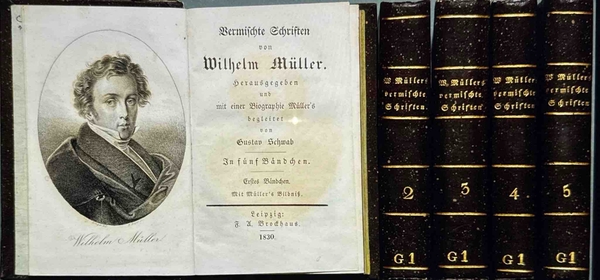 Winterreise has been called the lieder singer's King Lear. One way, the comparison makes a kind of sense. Like Shakespeare's tragedy, the song cycle strikes without flinching to the heart of an ultimate, dark truth. Unlike Lear, though, it is a young man's creation, or rather, two young men's. Wilhelm Müller, the shadowy librarian and freedom fighter who wrote the poems for both Die Schöne Müllerin and Winterreise, was born in 1794 and died at the age of thirty-three, probably without ever having heard of Schubert. (His collection of poems was dedicated to another composer, Carl Maria von Weber, whom he apostrophized as "the master of German song." Posterity accords that distinction to Schubert.) Schubert, born three years later than Müller, was dead at thirty-one.
Winterreise might better be compared to Die Leiden des Jungen Werthers ("The Sorrows of Young Werther"), which Goethe, who outlived both Müller and Schubert, published when he was twenty-five, two decades before they were born. The manic-depressive hero of the slender novel touched off a vogue as sweeping as it was malefic: for blue coats, yellow vests, and death by a self-administered bullet through the brain. The florid agonies at the heart of both the novel and the song cycle (unlike the ripe, impersonal truths of Lear) are subjective, the morbidities of hyperextended post-adolescence.
Beyond that, this resemblance fails, too. At our remove, Werther reads like a historical document; inflammatory, yes, but mawkish and of its period. If Müller's poems are considered on their own, their extreme simplicity--of diction, of rhyme scheme, of image, of psychology-might seem a little faded, too. Müller seemed to sense their shortcomings. "1 cannot play or sing," he wrote in his diary, "yet when I write poems, I sing and play after all. If I could give forth the melodies, people would like my songs better. But take comfort. Maybe a soul of my temper will be found who will hear the melodies in the words and give them back to me."
And that miracle did come to pass. Richard Capell was right to say, in his classic study Schubert's Songs, "We cannot be Schubertians without being a little Müllerian also." Behind Müller's picturesque situations--some lachrymose, some macabre--lie clear, uncontrived sentiments that proceed from an innocent heart. Schubert acknowledged them without a blush, lent them musical immediacy, and touched them with transcendence.
There is a song in the second half of Winterreise called "Der Greise Kopf" ("The Grizzled Head"). The lyric turns on the image of frost (evoked in brittle turns in the melody) that has whitened the wanderer's hair, though only for a moment. Bär likes to quote the line "Now I have black hair again."
"There's my excuse for daring to sing this music at thirty--a man with real gray hair raises a question about truth," says Bär (who is blond). "Schubert was far smarter, far wiser than I am, but as to age, he was just as naïve. Now I know that one ought to start with these songs at eighteen. These are songs for young people."
*